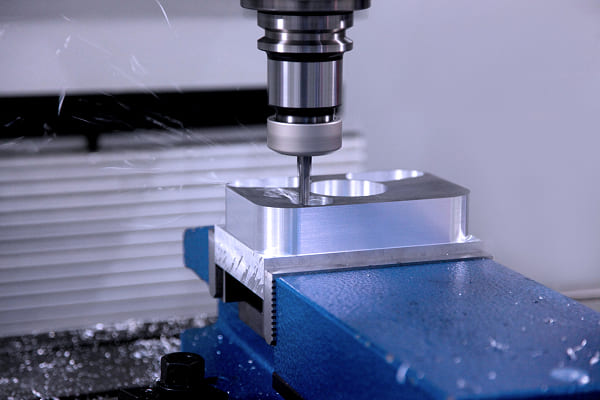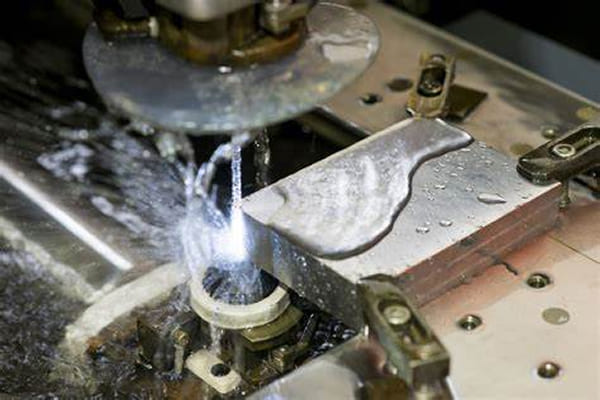
I see many buyers worry about hidden manufacturing problems. They face high costs and poor precision. They search for a proven way to solve these issues.
CNC machining is better because it offers faster production, higher accuracy, and stable results. It lowers the risk of mistakes and gives buyers the confidence that each product will match the desired design.
I want to show how CNC machining can help people meet strict quality and cost requirements. I will explain its benefits through real insights and easy examples.
What is the advantage of CNC machining?
I see product managers worried about maintaining quality in mass production. They feel uncertain about achieving consistent tolerances when manual methods lead to variations. CNC solves this problem.
CNC machining is an efficient process. It creates precise parts consistently. It reduces errors and speeds up large-scale production.
The advantages of CNC machining1
Consistent Accuracy
I have worked on many projects where every part needed to match a tight tolerance. CNC machines use computer-controlled movements2. That means each movement follows a precise path. Manual methods often depend on an operator’s skill. But CNC reduces human error. As a result, even if I produce 1,000 identical parts, each part will likely meet the same quality requirements. This consistency leads to fewer rejections and returns.
Speed and Efficiency
CNC machining3 is much faster than manual methods4. Computers handle speed settings and cutting paths. This system helps me reduce set-up times. Once the program is ready, the machine executes each step without pausing for guesswork. I used to rely on manual milling, which took much longer. Now, with CNC, one operator can oversee multiple machines. This allows me to boost output. I also find that the consistent cutting paths reduce wasted material, leading to cost savings.
Complex Designs
CNC machines handle shapes that are hard to make with manual tools. Automated controls let me create intricate curves, holes, and pocket features with fewer steps. In one project, I needed to make an aluminum enclosure with varying wall thicknesses and multiple internal cavities. Manual methods would have been time-consuming. But CNC easily processed each feature. This opens up new design possibilities. My clients can now propose more advanced products without worrying if the shapes are too complicated.
Cost Savings
When I use CNC, I reduce the time needed for each operation. I also decrease the chance of scrap parts. The less rework I do, the lower my costs. Although CNC machines can be expensive, the long-term savings in time and labor can offset that cost. I can pass some of those savings to my clients. That makes my service more attractive compared to purely manual methods5.
| Factor | Manual Machining | CNC Machining |
|---|---|---|
| Accuracy | Operator-dependent | Computer-driven, consistent |
| Speed | Slower | Faster with repeatable operations |
| Complexity | Limited by skill | Capable of intricate designs |
| Labor Cost | High | Lower per part in large volumes |
| Material Waste | Often more | Usually less |
I see that CNC machining provides a major advantage in consistent accuracy, faster production, and complex part geometry. It also supports better cost management. That is why I enjoy recommending CNC services to people who need reliable and efficient manufacturing.
Why do engineers like CNC machining?
I see engineers worry about product reliability. They want a dependable way to control dimensions and performance. They also want faster prototyping.
Engineers appreciate CNC for its stability, repeatability, and design freedom. They can trust the outcome, even for large runs.
why engineers prefer CNC
Precision and Reliability
Engineers think about perfect part alignment, correct hole placement, and accurate wall thickness. CNC machines work with software that controls each axis precisely. This means the machine repeats the same motion many times with minimal deviation. Engineers see that their design data stays intact from computer model to final part. If they need 500 parts with a tolerance of +/- 0.005 mm, CNC can handle it.
Material Flexibility
Engineers choose from metals like aluminum, steel, copper, or even plastics. CNC machines can handle each material by adjusting speed and cutting tools. This helps them test multiple material options without changing the entire manufacturing process. In my experience, an automotive company I worked with wanted to see if they could switch from steel to a lighter alloy. We simply altered the feed rates and tool selection on our CNC machines. This versatility is very appealing.
Faster Prototyping
Speed matters to engineers who want to iterate on designs. CNC machining allows faster prototyping because it does not involve complicated tool setup for each design iteration. Once I have the CAD data, I can run it through the CNC program. That means less lead time from concept to tangible prototype. This is a major advantage for research and development cycles.
High Scalability
Engineers do not want to worry that a method good for prototyping will fail at full-scale production. CNC is a scalable method. After testing and finalizing a part design, we can use the same program for thousands of parts. There is no need to retool or train operators in specialized manual steps.
Collaboration and Communication
Engineers often communicate with CNC machinists using standard file formats like STEP or IGES. This makes the communication process smoother. There is no guesswork in reading sketches or handmade drawings. Everything is digital. The machinist can quickly import the design into CAM software, plan tool paths, and run the machine. This reduces errors and fosters better collaboration between design and manufacturing teams.
I see that engineers value CNC machines because of the repeatable accuracy, flexible materials, and quick prototyping. They also appreciate how CNC scales well from one-off parts to mass production. This approach helps them maintain quality, shorten development cycles, and stay competitive in a demanding market.
Why is CNC better than manual?
I meet many people worried about human error in manual work. They lose time correcting mistakes. They wonder if there is a more reliable method.
CNC is better than manual because it reduces reliance on operator skill, ensures uniform results, and improves throughput.
CNC vs manual machining
Reduced Reliance on Operator Skill
Manual machining often depends on the expertise of an operator. Mistakes can happen due to fatigue or misjudgment. CNC, however, follows a program that is set in advance. Once the program is correct, the machine runs consistently. This lowers the risk of small human errors. In my early career, I sometimes made slight tool depth mistakes while manually milling. With CNC, the system handles tool paths according to the code, so I see fewer errors.
Improved Throughput
Because CNC can work faster and does not need constant operator attention, we can finish jobs sooner. For example, if we need 200 identical parts, a manual approach might involve repeated measurements and slow cutting. CNC does it in a fraction of the time, using the same accurate movements each cycle. This allows me to finish orders on schedule and keep customers happy.
Complexity of Parts
I remember an order for a complex bracket with multiple angled features. Manual machining would have required me to set up different jigs or fixtures for each angle. This approach would have been time-consuming. With CNC, I programmed the angles, set the zero point, and let the machine do the rest. The bracket turned out perfect with minimal effort. This shows how CNC handles geometry changes more gracefully than manual tools.
Better Quality Control
CNC systems often come with in-process inspection tools or can be paired with measuring probes. We can verify dimensions as the part is being machined. This immediate feedback loop helps correct small deviations on the fly. Manual machining usually requires stopping the machine, measuring manually, and then adjusting. This introduces more potential for human error. Automatic measuring with CNC helps me maintain a stable quality standard for each batch.
Reduced Physical Strain
Manual machining can be hard on the operator. It involves continuous handling of heavy tools, repeated manual feeds, and a lot of standing. CNC operators can set up the machine, start the program, and monitor from a comfortable position. This reduces fatigue, which in turn lowers the chance of mistakes. It is also better for long-term health. I enjoy seeing operators remain more alert and engaged, focusing on higher-level tasks rather than repetitive manual labor.
Overall, CNC surpasses manual methods in consistency, speed, flexibility, and overall efficiency. Although manual machining remains valuable for some niche tasks, I see CNC as a clear winner for modern manufacturing needs.
Why become a CNC machinist?
I have friends who doubt the career potential in machining. They think it might be limited or physically demanding. They want to know if there is real growth here.
Becoming a CNC machinist offers stable career prospects, high demand, and a chance to work with advanced technology.
The CNC machinist career path
Technological Growth
When I started, I saw older manual machines in many shops. Today, the trend is moving toward automation. Companies that invest in CNC look for skilled people who know G-code, CAD/CAM software, and machine setup. As a CNC machinist, I stay current with new technology. This knowledge keeps me relevant in an ever-changing manufacturing landscape.
Good Earning Potential
CNC machinists often earn better wages than unskilled labor. Skilled CNC operators, programmers, or setup experts can negotiate higher pay because of their specialized expertise. I find that companies are ready to pay for reliable individuals who can keep production lines running smoothly. This can lead to a stable and rewarding career.
Creative Problem-Solving
I spend a lot of time tackling machining challenges. Sometimes a part’s geometry is complex, or the material is difficult to cut. As a CNC machinist, I create solutions by choosing the right tooling, speeds, or programming strategies. This problem-solving aspect keeps the job interesting. I am not just pressing a button. I am engineering solutions every day.
Transferable Skills
The knowledge I gain in CNC machining applies to other areas of manufacturing and design. Once I understand computer-controlled processes, I can branch into automation engineering, robotics, or advanced manufacturing roles. My experience in reading design files, setting up machines, and optimizing production is valuable in many settings. It even helps me collaborate with design teams more effectively.
Job Security
Manufacturing is not going away. We still need parts for vehicles, medical devices, electronics, and countless other products. CNC plays an important role in making these parts with precision and speed. This means CNC machinists are in demand. I have found that even during tough economic times, skilled machinists remain essential.
Opportunities for Growth
Some machinists become supervisors or managers. Others open their own shops. The skill set gained through years of machining is a strong foundation for entrepreneurship. With CNC knowledge, I can offer specialized services to local businesses or even international clients. This opens doors to becoming a business owner or consultant.
Becoming a CNC machinist is not just about running a machine. It is about gaining technical knowledge, problem-solving skills, and a stable career path in a field that is always evolving. There is room for growth, creativity, and good income. I see it as a solid career choice for anyone who likes hands-on work with a mix of technology and innovation.
Conclusion
CNC machining stands out for its accuracy, reliability, and efficiency. It drives success in modern manufacturing with consistent results and scalable processes.
-
It's the main topic and understanding it is crucial for the text. ↩
-
It's a key aspect of CNC machining, explaining its accuracy. ↩
-
It's the main topic and understanding it is crucial for the text. ↩
-
Understanding this contrast helps to appreciate the benefits of CNC. ↩
-
Understanding this contrast helps to appreciate the benefits of CNC. ↩